 Parktown Blinds
Turn the stoep back into a room, without a single post.
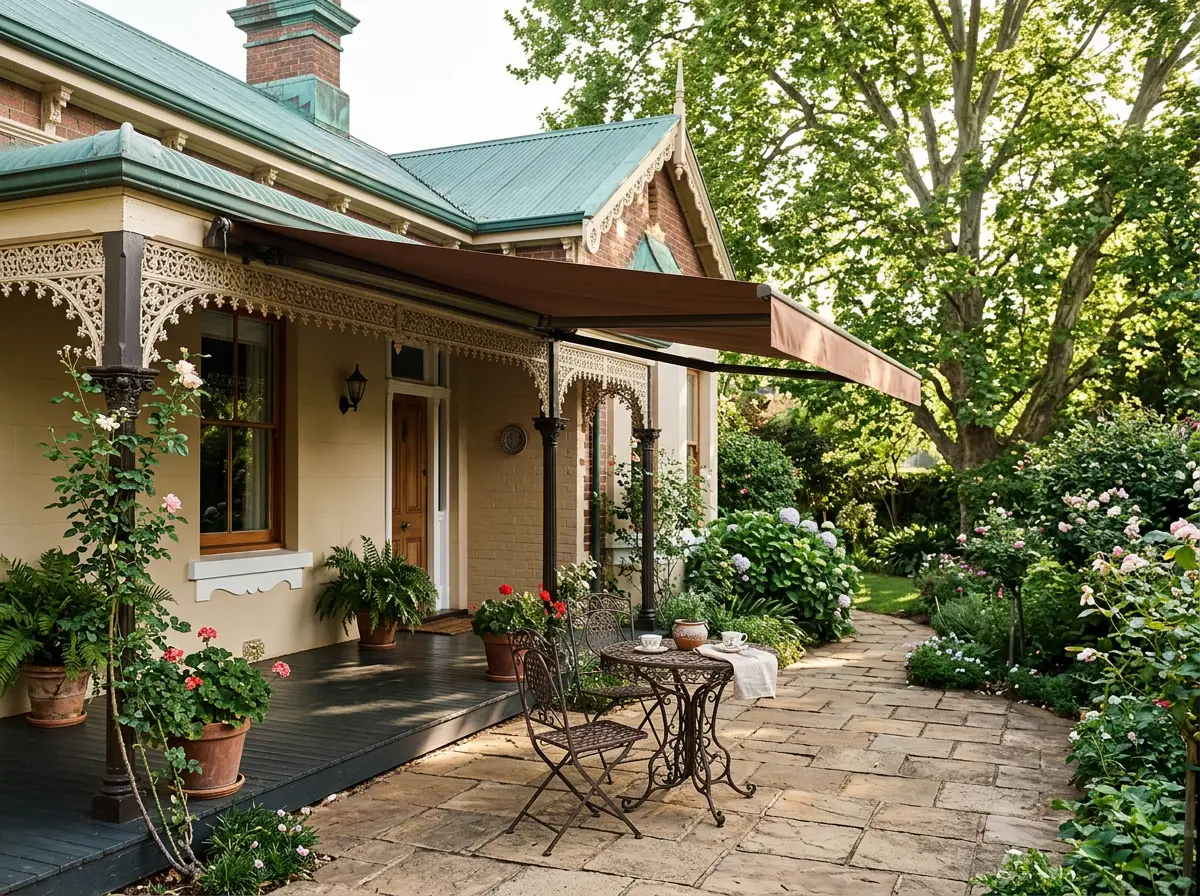
Retractable folding-arm awnings shade a patio on demand and disappear into a cassette when you don't need them. This page also covers zip screens for closing an outdoor room off from wind.
Why this works on a Parktown North stand
Deep, established gardens here usually mean a north- or west-facing stoep that bakes through summer afternoons under an open sky, even with mature trees elsewhere on the property. A folding-arm awning turns that space back into somewhere you'd actually sit — no posts breaking up the garden view, no permanent roof structure to clear with a heritage overlay if your street falls under one. Fully retracted, it disappears into its cassette and lets the winter sun back in, which a fixed patio roof simply can't offer.
Getting the spec right
Projection typically runs to the 3–4m class over a wide span, in solution-dyed acrylic fabric chosen to hold its colour under South African UV rather than fade out in a season or two. A full cassette seals the fabric and arms away completely when retracted — worth it in an exposed position — while semi-cassette or open mounting suit a more sheltered stoep. Motor plus wind sensor is the spec we'd call responsible, not optional: an awning caught open in a sudden Highveld thunderstorm gust can be destroyed outright, and the auto-retract protects the investment without you needing to be home to react.
Honest limitations
An awning is a shade product, not a rain product — it copes with light drizzle at a pitch, never a proper Highveld downpour or standing water. Wind ratings are real engineering limits, not a suggestion to push past. And the fixing substrate matters: brick, timber fascia and steel all take the mounting hardware differently, so a site assessment at your free measure isn't a formality, it's what determines whether the installation will actually hold.
Close the outdoor room off, without walling it in.
Wind-proof mesh or PVC runs in a zipped side channel, so the screen stays taut and tracks cleanly instead of billowing loose in a gust — the difference between a proper outdoor room and a flapping curtain. Pair a zip screen with a folding-arm awning over the same stoep and you get shade from above and a wind break from the side, controlling a garden entertaining area through most of the year rather than just the calmest days.
Spaces that only get used half the year without it.
North & west-facing stoeps
Shade on demand, retracted the moment you want winter sun back.
Braai & entertaining areas
No posts breaking up the space or the sightline to the garden.
Wind-exposed patios
Zip screens hold a taut line instead of billowing in a gust.
Second-storey balconies
Motorised control with wind sensor, since you can't always reach a crank handle safely.
Awnings and zip screens across the Parks belt.
Fitting folding-arm awnings and zip screens across Forest Town, Parkview, Parkwood and Saxonwold — a regular pairing on Parkwood's new stacking-door renovations, and just as at home over a Forest Town garden entertaining area or a Saxonwold stoep with room to spare.
What it costs
Priced by the shade, not the frame
An awning is costed on width multiplied by projection, and the guide, installed, is R3,500 to R5,500 per square metre for a crank-handle unit and R5,500 to R7,500 per square metre motorised with a wind sensor. A full cassette to shut the fabric away, and the longer projections, are what take a job to the upper figure.
A short awning over one door still carries a minimum charge, because the arms, the cassette and the wall fixing are the same work at any width. What the wall is built of decides as much as the size does on houses of this age, so the substrate is checked at the free measure before the written price is put together.
Let's look at your stoep or patio properly.
Free in-home measure, written per-window quote — no online self-measure, no obligation past the quote.